Selling A View Home In Las Vegas: Pricing And Presentation
June 11, 2026
June 11, 2026
If your home has a Strip view, mountain backdrop, or wide-open desert outlook, it can absolutely stand out in the Las Vegas market. But a view does not automatically guarantee a higher sale price, especially in a market where buyers are comparing carefully and negotiating hard. If you want strong results, you need the right mix of pricing discipline and polished presentation. Let’s dive in.
In Las Vegas, views are part of the lifestyle appeal. Clark County highlights landmarks and scenery like the Las Vegas Strip, Red Rock Canyon, and Mt. Charleston, which helps explain why buyers often notice outlooks tied to city lights, mountains, and desert scenery.
At the same time, the broader market still matters. In May 2026, Las Vegas had about 10,000 active listings, a median listing price of $465,000, median days on market of 48, and homes selling for about 1.22% below asking on average. That points to a buyer-leaning environment where sellers usually need evidence to justify any premium.
That is why a view home should be treated as a micro-market listing. In neighborhoods like Summerlin West, Southern Highlands, La Madre Foothills, and Kyle Canyon, pricing can sit well above the citywide median, and details like elevation, orientation, and the quality of the sightline can matter just as much as the ZIP code.
The biggest pricing mistake sellers make is assuming the view adds the same value in every setting. Research does not support a universal premium, and that matters if you are trying to price with confidence.
Instead of using broad city averages, your pricing strategy should focus on homes with similar features, similar positioning, and a similar type of outlook. A home with a full Strip view from the main living area and primary suite is not the same as a home with a partial mountain view from one upstairs window.
A narrower comp set usually gives you a better read on value. For view properties in Las Vegas, that means looking closely at community, lot position, elevation, orientation, and how visible the view is from the rooms buyers care about most.
Many sellers want a simple answer to one question: how much is the view worth? The honest answer is that there is no fixed number.
One single-family study found an average 3.4% premium for scenic accessibility, while a 2026 high-rise study found about 11% for partial views and 22% for full views compared with no view. The practical takeaway is not to pick a percentage and apply it blindly. The real value depends on the type of view, how open it is, and how rare it feels in that specific market.
Clear language matters when you price and market a view home. Research shows that premiums tend to rise with better view quality, so the difference between full, partial, filtered, obstructed, and seasonal is important.
That means your listing should be precise. If the home has a full Strip view from the great room and balcony, say that. If the mountain view is partial or visible only from certain angles, that should be stated clearly too.
It is easy to think every scenic view adds value in the same way, but the research says otherwise. Some studies found strong premiums for certain scenic settings, while others found mountain views could be neutral or even negative depending on the market and what the view actually included.
The same idea applies to golf views. Research suggests homes near golf courses can sell at a premium, but the value may come more from open space, privacy, or a broader lifestyle setting than from the golf course itself.
For Las Vegas sellers, the lesson is simple: market the actual benefit the buyer will experience. That could be city lights, privacy, horizon views, open space, or indoor-outdoor living, rather than relying on a generic “view home” label.
Once pricing is grounded in reality, presentation becomes the next lever. A view home should feel like the view is part of the living experience, not an afterthought.
That starts with the spaces that frame it best. The most important rooms are usually the living room, dining area, primary bedroom, and any patio, balcony, deck, or outdoor sitting area that opens toward the scenery.
NAR’s 2025 home staging report found that 83% of buyers’ agents said staging makes it easier for buyers to visualize a property as a future home. The most commonly staged rooms were the living room, primary bedroom, and dining room, which lines up perfectly with the rooms that often matter most in a Las Vegas view home.
A beautifully furnished room can still miss the mark if it blocks the sightline. For a view property, furniture placement should support the windows, not compete with them.
That often means removing oversized pieces, lowering visual clutter, and creating a clean line from the entry point of the room toward the glass. In some homes, a small layout adjustment can make the view feel larger and more immediate.
Natural light and window clarity do a lot of heavy lifting in a view home. If the windows look dim, dirty, or screened off, buyers will not fully connect with what they are supposed to notice.
Photography guidance from Zillow recommends opening blinds, turning on lights, removing window screens when possible, and avoiding large foreground objects that block the scene. In real terms, that means the glass, horizon line, and view corridor should be treated like premium selling features.
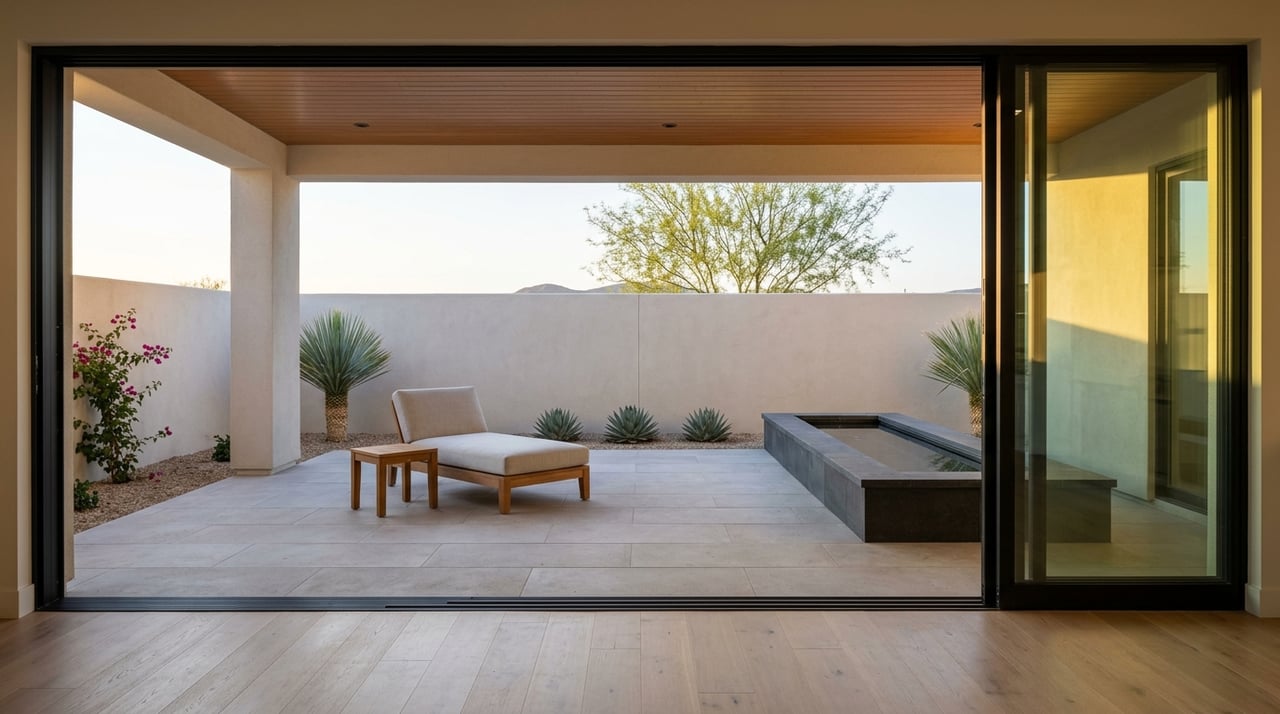
In Las Vegas, outdoor space often plays a big role in how buyers experience a home. If your patio, pool area, balcony, or deck connects to the view, that area should look just as intentional as the inside.
Zillow’s photo checklist specifically calls out patios, decks, landscaping, and pools or hot tubs as valuable images. That is a helpful reminder that buyers are not just buying what they see through the window. They are also buying the way they imagine using that view day to day.
Most buyers will meet your home online before they ever walk through the front door. That is especially true for relocating buyers and busy local shoppers who are filtering listings quickly.
For a view home, the photos, tour, and floor plan need to do more than document the property. They need to explain where the view is, how it connects to the layout, and what the experience actually feels like inside the home.
A basic photo set may not be enough if the view is one of the home’s strongest selling points. Research from Zillow points to a stronger media stack for this kind of listing, including high-resolution photography, floor plans, interactive floor plans, virtual tours, aerial photography, social media video, real twilight photos, and virtual staging or furniture removal when needed.
That approach gives buyers context. They can see the home from the air, understand the floor plan, and connect the sightline to the spaces where they would actually live.
For certain Las Vegas properties, aerial photography can be especially useful because it helps show elevation, orientation, and surrounding open space. Zillow reports that properties with aerial imagery are 68% more likely to sell than properties without it.
Zillow also found that listings with a 3D Home tour received 37% more views than listings without one. For sellers, that matters because more engagement often means more informed buyers and better-quality showings.
It can be tempting to over-edit listing photos, especially when the view is a major selling point. But the best strategy is not exaggeration. It is honest, polished presentation.
Zillow’s 2026 guidance recommends better lighting, true-to-life color, and recovered window detail rather than unrealistic edits. NAR also noted in 2026 that misleading photos can disappoint buyers in person and even lead to lower offers. In other words, your marketing should show the real view at its best.
Your hero image should usually feature the best view in the most attractive and believable way. That might be a great room with city lights beyond the glass, a balcony shot at the right time of day, or a twilight image that captures the relationship between the home and the skyline.
After that, the photo order should keep building the story. Show the main living spaces, then the primary suite, then the outdoor areas, and support it all with a floor plan that helps buyers understand the flow.
Strong listing descriptions do not just repeat “amazing views” several times. They explain what the buyer is actually seeing and where they can enjoy it.
That could mean mentioning a full Strip view from the main living area, a partial mountain outlook from the primary suite, or an elevated lot with open desert scenery from the backyard. Specific language builds trust and helps the right buyers respond.
In a buyer-leaning market, overpricing can hurt momentum. If your home launches too high based on a view premium that buyers do not support, you may miss the early window when the listing feels fresh.
A strong pricing and presentation plan is meant to help you avoid that. The goal is not just to list high. It is to enter the market with a price buyers can respect and a presentation that helps them see why your home deserves serious attention.
A Las Vegas view home can absolutely command attention, but the best results usually come from discipline, not guesswork. You need a pricing strategy built around the right micro-market comps, a clear description of the actual view, and marketing that makes the experience easy to understand online.
That is where a presentation-first listing strategy can make a real difference. When your staging, photography, video, and pricing all work together, the view feels like a premium feature buyers can see, trust, and value.
If you are thinking about selling a view home in Las Vegas, Teresa McCormick LLC can help you position it with thoughtful pricing, polished presentation, and a turnkey strategy designed to help your home stand out.
Stay up to date on the latest trends in real estate.
October 15, 2026
October 8, 2026
October 1, 2026
September 24, 2026
September 17, 2026

September 10, 2026
September 3, 2026
August 27, 2026
August 20, 2026
Whether you're buying your first home or selling a cherished family property, I'm here to support you every step of the way, ensuring your real estate experience is positive and rewarding.